

Key Takeaways:
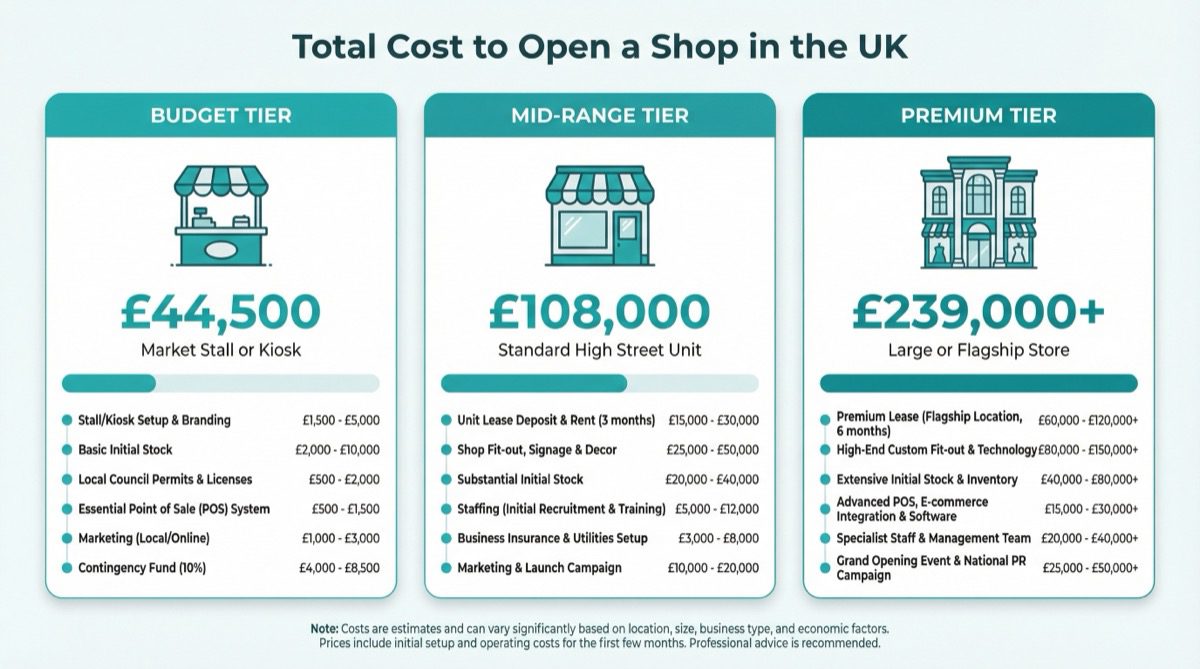
- Opening a retail shop in the UK in 2026 costs between £44,500 and £239,000+, depending on location, size and specification.
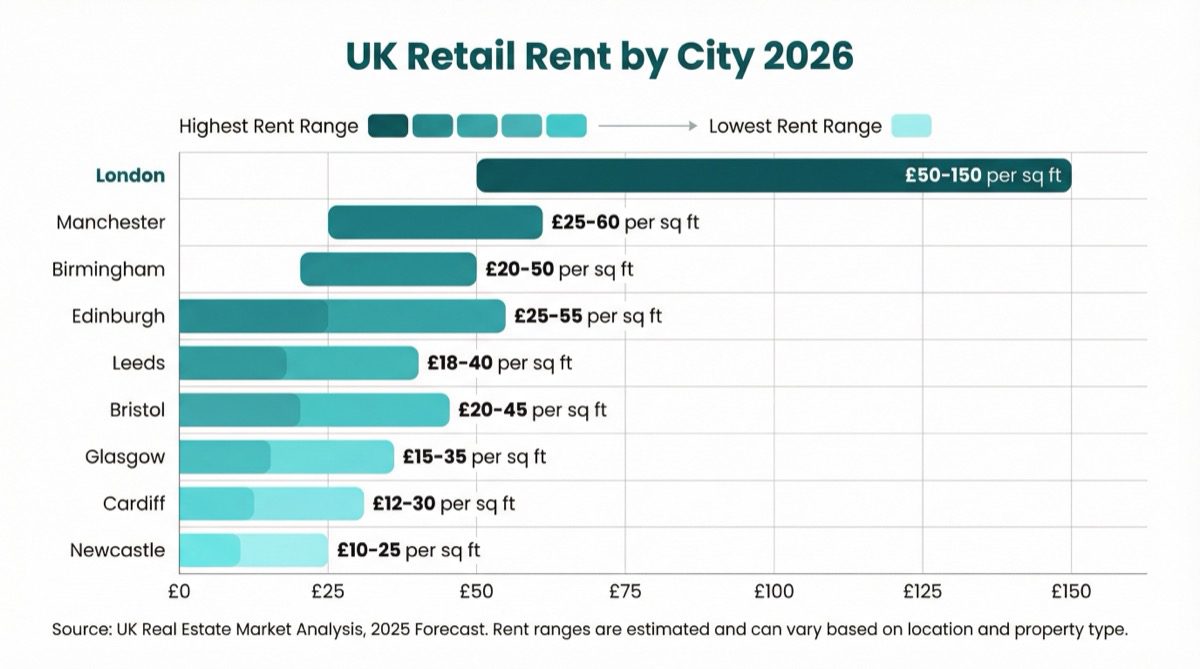
- London high street rents run £50–£150 per square foot, while regional cities like Manchester and Birmingham sit at £25–£60.
- New permanent business rates multipliers from April 2026 (38.2p and 43p) cut annual bills for over 750,000 retail properties.
- A new shop front — often 20–35% of your customer-facing fit-out spend — starts from £2,500 for aluminium and £4,000+ for timber.
- Fit-out costs range from £50 per square foot (basic) to £145+ per square foot (premium), making a 500 sq ft shop between £25,000 and £72,500+.
A landlord hands you the keys to your first retail unit. It should feel like a milestone — and it is. But somewhere between the lease deposit, the solicitor’s invoice, the business rates demand and the shop fitter’s quote, the romance of opening a shop quickly turns into a spreadsheet exercise.
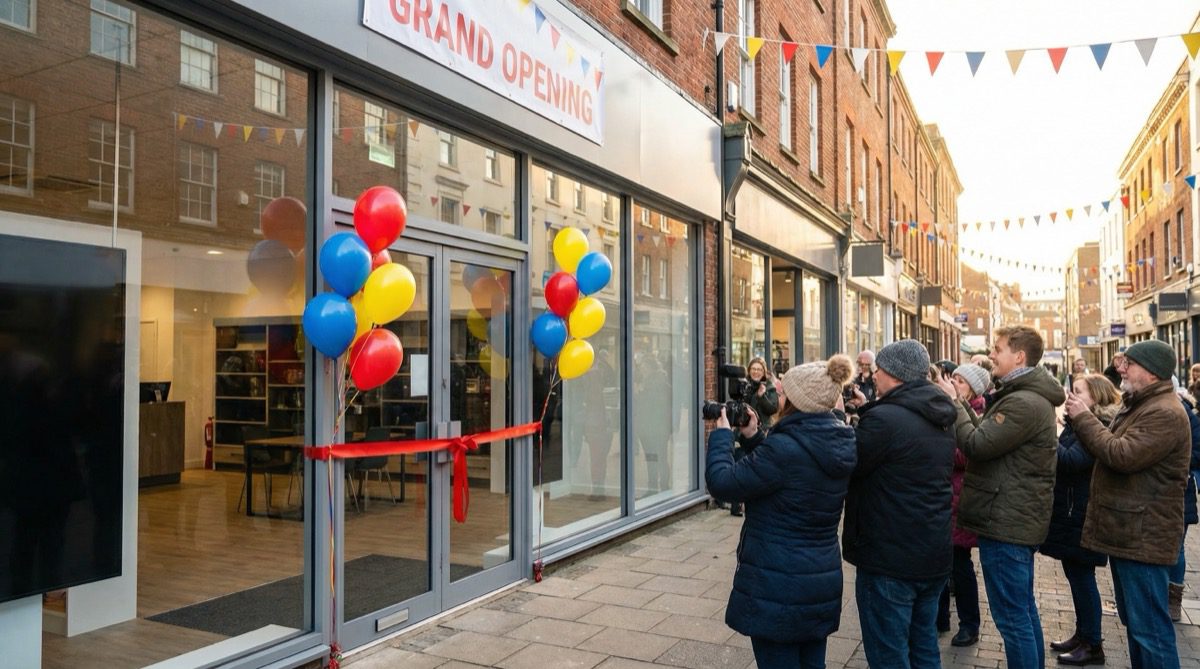
Most “how much does a shop cost” guides leave out the one thing every customer sees first: your shop front. They bury it inside “fit-out costs” as though the physical face of your business is an afterthought. It is not. Your frontage shapes first impressions, footfall, security and long-term maintenance bills.
This guide breaks down every major cost of opening a retail shop in the UK in 2026 — rent by city, the new business rates regime, fit-out budgets, stock, insurance — and treats your shop front as the distinct investment it actually is.
UK Retail Rent: How Much Does It Cost by City?
Rent is the single largest recurring cost for a physical shop, and it varies wildly by location. A square foot of prime retail space in London can cost ten times what you would pay in Leeds or Liverpool. The figures below reflect prime high street rents as of early 2026. Secondary locations, retail parks and side streets typically run 40–70% less.
Prime High Street Rents by City
| City | Annual Rent Per Sq Ft | 500 Sq Ft Unit (Annual) | Notes |
|---|---|---|---|
| London — West End | £200–£500 | £100,000–£250,000 | Bond Street exceeds £1,200/sq ft |
| London — Central (small units) | £50–£150 | £25,000–£75,000 | Boutiques, independent retail |
| Manchester | £25–£60 | £12,500–£30,000 | Strong regional market |
| Birmingham | £20–£50 | £10,000–£25,000 | 20% annual rent growth recently |
| Edinburgh | £170–£220 | £85,000–£110,000 | Strong tourist-driven footfall |
| Leeds | £120–£160 | £60,000–£80,000 | Affordable northern option |
| Bristol | £130–£170 | £65,000–£85,000 | Growing creative economy |
| Glasgow | £140–£180 | £70,000–£90,000 | Strong city-centre demand |
| Liverpool | £100–£140 | £50,000–£70,000 | Cheaper in regeneration areas |
Secondary Locations and Retail Parks
Not every shop needs a prime high street address. Secondary locations — side streets, suburban parades, retail parks — typically run £15–£50 per square foot per year. For an independent retailer opening their first shop, a secondary pitch with strong local footfall often makes more financial sense than stretching for a prime unit and burning through cash in the first year.
The trade-off is visibility. A prime high street location gives you passing trade; a secondary location means you need to work harder on marketing to pull people in. That said, your shop front becomes even more important in a quieter spot — it needs to stop people in their tracks.
Business Rates: What Will You Pay in 2026–27?
Business rates are a tax on your premises, calculated by multiplying the property’s rateable value (set by the Valuation Office Agency) by a government-set multiplier. They are payable whether or not you are trading profitably.
The New 2026–27 Retail Multipliers
From April 2026, the government is introducing two new permanent lower multipliers for retail, hospitality and leisure properties. This is not a temporary relief scheme — it is a structural tax cut worth nearly £1 billion per year, benefiting over 750,000 properties across the UK.
| Rateable Value | New Multiplier (2026–27) | Example Annual Bill |
|---|---|---|
| Under £51,000 | 38.2p in the pound | £20,000 RV = £7,640/year |
| £51,000–£499,999 | 43p in the pound | £100,000 RV = £43,000/year |
Small Business Rate Relief
If your property’s rateable value is below £12,000, you may pay no business rates at all. Properties with a rateable value between £12,001 and £15,000 receive tapered relief. For many independent shops in smaller towns, this effectively wipes out the rates bill entirely — a genuine advantage of choosing a more modest premises over a prime city-centre unit.
Check the VOA’s online tool to find your property’s rateable value before signing any lease. The difference between a £14,000 and £16,000 rateable value could mean thousands a year.
Lease Costs: Deposits, Legal Fees and Hidden Charges
Your landlord will not hand over the keys without a deposit, and you should not sign a commercial lease without a solicitor reviewing it.
- Deposit: Typically 3–6 months’ rent held as security. On a £1,500/month unit, that is £4,500–£9,000 tied up before you have spent a penny on fit-out.
- Legal fees: £500–£3,000 for lease review and negotiation. A good commercial property solicitor is worth every pound — they will spot break clauses, repair obligations and rent review mechanisms that could cost you far more down the line.
- Lease premium: Some units, particularly in prime locations, charge an upfront premium for the right to take on the lease. This is separate from rent and deposit, and can run into tens of thousands.
Dilapidations: The Cost Nobody Mentions
Most commercial leases require you to return the property to its original condition at the end of the term. If you install a new shop front, flooring and lighting, you could face a bill to strip it all out. Negotiate a “schedule of condition” that limits your liability to the state the property was in when you took it on.
Shop Fit-Out Costs: What to Budget Per Square Foot
The fit-out covers flooring, lighting, shelving, counters, electrical work and your shop front. It is where budgets either hold or spiral.
Fit-Out Costs by Specification
| Specification | Cost Per Sq Ft | 500 Sq Ft Shop | What It Includes |
|---|---|---|---|
| Low (basic) | £50–£70 | £25,000–£35,000 | Paint, basic fixtures, standard lighting, simple shelving |
| Medium | £80–£100 | £40,000–£50,000 | Custom counter, feature lighting, branded signage, quality finishes |
| High (premium) | £145+ | £72,500+ | Bespoke joinery, architectural lighting, premium materials throughout |
Key Fit-Out Cost Drivers
Three things tend to push fit-out costs higher than expected:
- Electrical work. If the existing wiring cannot handle your lighting and equipment needs, rewiring a 500 sq ft retail unit can cost £3,000–£8,000.
- Disability access. Under the Equality Act 2010, you must make reasonable adjustments for disabled customers. Widening a doorway, adding a ramp or installing an automatic door should be in your budget from day one — not an afterthought.
- The shop front itself. Most fit-out guides lump this in with general works, but it deserves its own budget line. We cover this in detail below.
Your Shop Front: The Investment That Pays for Itself
Here is what most startup cost guides get wrong: they treat the shop front as part of “fit-out” and move on. But your frontage is not a line item buried in the builder’s quote. It is the single most visible element of your entire investment — the first thing every potential customer sees and the 24/7 billboard you never have to pay to run.
Why Your Shop Front Deserves Its Own Budget Line
Your shop front typically accounts for 20–35% of your customer-facing finishes spend. On a £50,000 fit-out budget, that is £5,000–£10,000 dedicated to the element that directly faces the street. Unlike internal fit-out that only existing customers see, your frontage works on everyone who passes. It affects security, energy efficiency, natural light, signage and — most importantly — whether people walk in or walk past.
Shop Front Costs by Material
| Material | Cost Per Sq Metre | Typical Total Cost | Best For |
|---|---|---|---|
| Aluminium | From £350/m² | £2,500–£7,350 | Most commercial applications, modern aesthetic, durability |
| Toughened glass | From £450/m² | £3,500–£10,000 | Premium retail, maximum product visibility |
| Timber | From £520/m² | £4,000–£12,000 | Heritage settings, conservation areas, artisan brands |
Aluminium is the most popular choice for new commercial shop fronts and the material we install most frequently at Huxley & Co. It will not rot, rust or warp, the powder-coated finish lasts decades without repainting, and it gives you slim sightlines that maximise your glazed area. For shops in conservation areas or period buildings, timber shop fronts are often a planning requirement — and they look stunning when done well, though they need more maintenance than aluminium.
Toughened glass frontages suit retailers who want maximum transparency — think jewellers, fashion boutiques and cafes where seeing inside is part of the appeal. The glass must meet safety standards (BS 6206 or BS EN 12600) and is typically combined with an aluminium framework. If you want the option to open your frontage entirely in warmer months, bi-folding doors create a seamless indoor-outdoor transition that is increasingly popular with retail and hospitality businesses.
Additional Shop Front Costs to Budget For
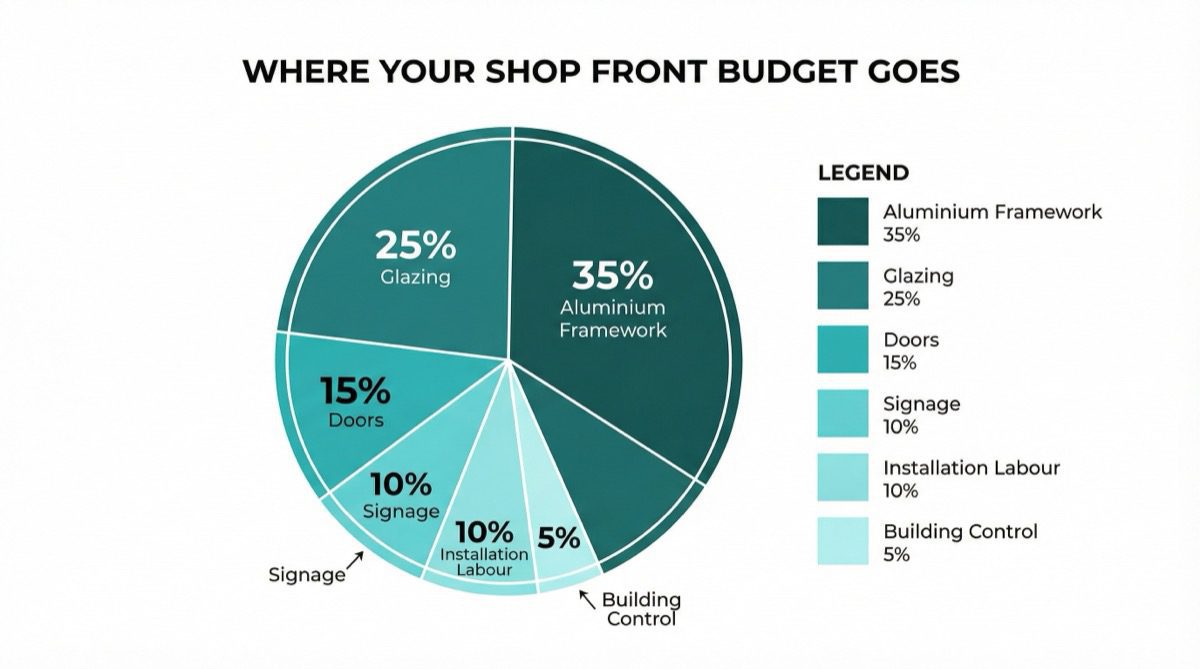
The material cost is the starting point. A complete shop front project typically includes several extras:
| Item | Cost Range | Notes |
|---|---|---|
| Installation labour | £1,000–£3,000 | Depends on complexity and access |
| Removal of old shop front | £500–£1,500 | Disposal included with most installers |
| Making good (brickwork, render) | £300–£800 | Often needed around the frame |
| Double glazing upgrade | £500–£1,500 | Improves energy efficiency and noise |
| Roller shutter | £1,500–£4,000 | Security, especially for high-value stock |
| Signage and fascia | £500–£2,500 | Illuminated options cost more |
| Canopy or awning | £1,000–£5,000 | Weather protection, branding opportunity |
| Automatic door | £2,000–£5,000 | Improves accessibility and customer flow |
| Planning application (if required) | £462 | Standard fee; conservation areas may cost more |
How Much Should a New Business Budget for Their Shop Front?
As a practical rule of thumb:
- Budget shop front (basic aluminium, single glazing, no extras): £2,500–£5,000
- Mid-range (aluminium with double glazing, signage fascia, roller shutter): £5,000–£10,000
- Premium (toughened glass or timber, automatic door, illuminated signage, canopy): £10,000–£15,000+
Use our shop front cost calculator to get a tailored estimate based on your frontage dimensions, material choice and extras. For detailed pricing information, our shop front cost guide breaks down what drives the price up and where you can save without compromising quality.
Other Startup Costs to Factor In
Beyond rent, rates, fit-out and your shop front, several other costs will eat into your budget:
- Stock: £5,000–£40,000+ depending on sector. Order conservatively for opening — dead stock ties up cash you need elsewhere.
- EPOS and technology: £500 for a basic card reader and till, up to £5,000 for a system with inventory management and analytics.
- Insurance: £500–£3,000 per year for public liability, stock, contents and business interruption. Employer’s liability is a legal requirement if you have staff.
- Marketing and launch: £1,000–£10,000. At the lower end, that covers signage (which ties into your shop front design), social media and local press. At the higher end, professional photography, paid advertising and a launch event.
- Working capital: Budget 3 months of running costs — £5,000–£30,000+ depending on your overheads. This is the one that catches first-time shop owners off guard.
Planning Permission and Building Regulations
- Change of use: Since Use Class E was introduced in September 2020, shops, restaurants, offices and light industrial units share the same planning class. Moving between Class E uses generally does not require planning permission.
- New shop front: A like-for-like replacement usually does not need permission. Changing the size, shape or overall appearance of the frontage typically does.
- Conservation areas: Stricter rules apply. Many local authorities require full planning permission for any external changes, and the design must be sympathetic to the area’s character. Timber shop fronts are often specified in conservation area guidance.
- Listed buildings: Listed Building Consent is always required for external alterations, regardless of how minor they seem.
- Building control: Commercial glazing does not fall under FENSA (which covers domestic work only). Your shop front installer needs to arrange building control approval from the local authority.
A standard planning application costs £462 and takes 4–8 weeks to determine. A reputable shop front installer will handle planning and building control on your behalf — ask whether this is included in their quote.
How to Keep Costs Down Without Cutting Corners
There is a difference between being cost-conscious and being cheap. Here is where experienced retailers save money.
- Negotiate the lease. Many landlords offer a rent-free period (typically 1–3 months) for fit-out. Also negotiate the break clause — a 5-year lease with a 3-year break gives you an exit if things do not work out.
- Phase your fit-out. Focus opening-day spend on customer-facing elements — your shop front, flooring, lighting and display fixtures — and phase back-of-house improvements over the first year.
- Invest in shop front quality. A cheap frontage needs replacing in 5–10 years; a quality aluminium shop front from an accredited installer lasts 25–30 years. The cheap option costs you double over two decades. Read more about when to replace your shop front.
- Get extras done at the same time. Retrofitting a roller shutter, canopy or automatic door after the initial installation costs 20–30% more. If you will want these within a few years, include them in the original project. Our shop front cost calculator lets you model different configurations.
The Complete Startup Cost Breakdown
Here is the full picture. This table covers a typical 500 sq ft retail unit outside London, with costs banded by specification level.
| Cost Category | Low End | Mid Range | High End |
|---|---|---|---|
| Lease deposit (3–6 months) | £4,500 | £15,000 | £36,000+ |
| Legal fees (lease review) | £500 | £1,500 | £3,000 |
| Fit-out (500 sq ft) | £25,000 | £50,000 | £100,000+ |
| Shop front | £2,500 | £5,000 | £12,000+ |
| Initial stock | £5,000 | £15,000 | £40,000+ |
| EPOS and technology | £500 | £2,000 | £5,000 |
| Insurance (year 1) | £500 | £1,500 | £3,000 |
| Marketing (launch) | £1,000 | £3,000 | £10,000 |
| Working capital (3 months) | £5,000 | £15,000 | £30,000+ |
| Total | £44,500 | £108,000 | £239,000+ |
These figures exclude ongoing monthly costs and assume no lease premium. London-based shops should add 30–50% to the mid and high-end estimates.
If you are opening a coffee shop or cafe specifically, our guide to coffee shop startup costs covers equipment, kitchen fit-out and frontage design in more detail.
Frequently Asked Questions
How much does it cost to rent a shop in the UK?
It depends entirely on location. A 500 sq ft unit on a secondary high street outside London might cost £10,000–£20,000 per year. The same size unit in central London could run £25,000–£75,000+. Regional cities like Manchester and Birmingham sit between £12,500 and £30,000 for a comparable unit.
How much are business rates for a small shop?
From April 2026, retail properties with a rateable value under £51,000 pay rates at 38.2p in the pound. A shop with a rateable value of £20,000 would pay £7,640 per year. If your rateable value is below £12,000, you may qualify for full small business rate relief and pay nothing.
How much does a shop fit-out cost per square foot?
Between £50 and £145+ per square foot, depending on specification. A basic 500 sq ft fit-out starts around £25,000; a premium fit-out for the same space exceeds £72,500. Your shop front typically accounts for 20–35% of the customer-facing finishes budget within that total.
Do I need a deposit to rent a commercial shop?
Yes. Most commercial landlords require a deposit of 3–6 months’ rent, held as security against damage or unpaid rent. On a £1,500/month unit, budget £4,500–£9,000. Some landlords accept a rent deposit deed instead, which offers more protection for both parties.
How much should I budget for a new shop front?
A basic aluminium shop front starts from around £2,500. A mid-range installation with double glazing, signage and a roller shutter runs £5,000–£10,000. Premium frontages in toughened glass or timber, with automatic doors and illuminated signage, cost £10,000–£15,000+. Use our shop front cost calculator for a personalised estimate.
What licences do I need to open a shop in the UK?
At minimum: business registration (sole trader, partnership or limited company) and business rates registration with your local council. Depending on what you sell, you may also need a premises licence (alcohol), food business registration, music licence and various sector-specific permits.
How long does it take to open a retail shop?
Budget 8–16 weeks from signing the lease to opening day. If planning permission is needed, add 4–8 weeks. A shop front installation itself typically takes 1–3 days once the unit has been manufactured.
Are business rates going down in 2026?
Yes. From April 2026, permanent lower multipliers of 38.2p (rateable values under £51,000) and 43p (£51,000–£499,999) replace the previous temporary relief schemes. This benefits over 750,000 retail, hospitality and leisure properties.
Is it cheaper to open a shop outside London?
Substantially. A shop costing £108,000 to open in a regional city could run £150,000–£200,000+ in central London, driven mainly by higher rent and lease premiums. Manchester, Birmingham and Leeds offer strong footfall at a fraction of London prices.
Getting Your Shop Front Right from Day One
Opening a shop is expensive. But the businesses that succeed long-term allocate their budget strategically — and that means treating your shop front as a distinct investment, not a footnote in the fit-out quote. Your frontage works for you around the clock, whether you are open or closed. It shapes perception, drives footfall, secures your premises and lasts decades when done well.
At Huxley & Co, we have been designing and installing commercial shop fronts across the UK for over 20 years. We are FENSA registered, CHAS accredited and Constructionline approved. If you are planning a new shop and want to understand what your frontage will cost, get in touch for a free site survey and quote, or call us on 020 7112 4849.
For shop front design inspiration, browse our recent projects or explore our guides to aluminium, toughened glass and timber shop fronts. If you are opening a hair salon or beauty business, our salon shop front design guide covers sector-specific considerations.